2024 Chemnitz - Germany
DEIB+ in Education to Transform Society
March 26-28, 2024 in Chemnitz (Germany)
European Capital of Culture 2025 Diversity, Equity, Inclusion and Belonging (DEIB) are key pillars in formal and informal education. However, although educational institutions around the globe aim to ensure future citizens equitable opportunities to live in a more resilient, openminded, inclusive, and democratic world, those same institutions are too often inequitable and selective, which has direct repercussions for their ability to transform society.
There is a need for research on the valorization of all facets of diversity within education, and for critical questioning of the (re)production of educational and social inequalities in different political, historical, and socioeconomic contexts. A broader approach to diversity challenges intercultural education and requires an intersectional approach to heterogeneity and the acknowledgement of newly emerging issues and needs (+) in education and society.
The conference thus aims to foster international debate on DEIB+, critically questioning Global South-Global North, Eastern and Western ideologies, and invites educational researchers and practitioners to propose and discuss related theoretical, methodological, and empirical work.
Strands
Keynote Speakers
Although the theory had its origins in the interconnection between gender, identity, and ethnicity, in recent years intersectionality has had considerable resonance in a range of disciplines, highlighting oppression, social discrimination and transversal multi-perspectivity. In the last decade, educational science has also seen growing international interest in the intertwining of power relations and inequalities relating to migration, ethnicity, gender, language, socio-economic class, capital structure, disability, and political and religious orientation; these issues merit special attention in educational research and practice. Although it is not a decisive factor, individuals with direct experience of migration are at risk of multiple disadvantages in educational institutions; for example, the impact of lack of skills in the national language of the new country of residence and the losses in social, cultural, and economic capital that all too often accompany migration. However, education systems can make a difference here and this conference theme aims to foster international debate on intersectionality with a view to promoting diversity, a sense of belonging, inclusion, and equity in education. Educational researchers and practitioners are invited to propose and discuss related theoretical, methodological, and empirical papers.
Epistemic violence constructs a connection between knowledge, domination, and violence in the colonial reality of modernity. Socially marginalized groups are most severely affected by epistemic violence as a result of the intertwining of knowledge production and hegemony. Discourses are generated through racialized knowledge about, and the racialized representation of, the “other”. Educational institutions are permeated by epistemic violence, especially when it comes to whose knowledge and which knowledge is defined as legitimate, worthy of recognition, objective and universally valid. Knowledge and the power to define what it consists in lie at the epistemic core of colonialism. Educational institutions continue to lack effective postcolonial approaches and participation strategies that disrupt practices of hierarchy and authority and encourage the decoupling, delinking, and unlearning of colonial power structures. The classroom and other educational spaces may be used to foster equality by increasing the effort to include everyone (and all voices). In this strand we will deal with questions of how educational institutions can develop postcolonial and critical participatory approaches. Is it even possible for educators and/or researchers to give others a voice? How can power be critically questioned within participatory approaches? How do we deconstruct dominant ideologies that create power imbalances? Educational stakeholders are invited to propose and discuss related theoretical, methodological, and empirical papers.
How can education change to promote peace, diversity, inclusion, recognition and both globalized and localized justice and wellbeing? Peace Education builds on the assumption that attitudes and behavior can be positively influenced by education; on the assumption that peace can in fact be learned. Peace education addresses issues such as how to overcome violence and war, how to empower people to deal with conflict constructively, and how to promote a culture of peace at the individual, societal and global level. A big concern is the transformation of inequitable and exploitative structures and the challenging of violence towards structures of solidarity and care. Transformation involves a deep shift in the basic premises of thought, feelings, and actions. It is a shift that dramatically alters our way of being in the world and our actions. How can we create peaceful visions of the future, new political outlooks and transformative pedagogies and practices that promote social change and peace? What transformative strategies and practices are already in existence? This theme aims to encourage international debate on educational approaches to promote peace, and invites researchers to propose and discuss related theoretical, methodological, and empirical papers.
The growing global ecological and social crisis, and the ongoing impact of the Covid-19-pandemic, have made critical transformative pedagogies in the context of Education for Sustainable Development (ESD) even more relevant. These critical and transformative approaches promote reflection on ecological and social problems in regional and social contexts and aim to change attitudes and behaviors as a basis for individual and collective courses of action. Moreover, an intercultural and postcolonial perspective also implies critical discussion of economy-based approaches to development and calls for alternative ideas of sustainability and critical, postcolonial approaches. Regional differences in the interpretation of these concepts raise questions about social and ecological objectives and how to deliver them in pedagogical settings. We ask, for instance, how such critical, postcolonial, contextual and intercultural approaches are contributing to social transformation and to (reshaping) the Sustainable Development Goals of Agenda 2030? To what extent do educational policies, practices, and research encourage individuals and social groups to participate in transformative educational processes? This strand invites educational researchers and practitioners to present theoretical and empirical papers that consider the tensions between ESD / SDG and critical, postcolonial, contextual, and intercultural approaches.
Intercultural competence is now practically taken as read in many fields. “Being” interculturally competent or “having” intercultural competence(s) is included as a requirement in job advertisements, and many academic and training curricula expect participants to acquire intercultural competences. Critical perspectives on the subject of intercultural communication and intercultural competences have already highlighted the persistence of closed and essentialist understandings of culture and the inability to transcend methodological nationalism, Westernized, economistic views of intercultural competences, ignorance of dominant power structures and the lack of a critical postcolonial viewpoint.
The aim of this strand is to critically discuss the status and relevance of intercultural competences with a view to rethinking intercultural practice and its links to diversity, equity, inclusion and belonging in formal and informal education and in everyday life more generally.
What is the current state of discussion on intercultural competences and intercultural practice? How relevant is this topic? Which perspectives and understandings are brought to the topic of intercultural competences today? How can intercultural practice be rethought from more critical, inclusive, and postcolonial perspectives? What kind of research is currently being carried out? How can we rethink intercultural competences and intercultural practice in the context of the postdigital era and the discontinuities between “online” and “offline” life? How are methods for training intercultural competences developing? How does the topic relate to perspectives on diversity, equity, inclusion and belonging?
As schools have become increasingly diverse, (future) teachers need to be trained to teach heterogenous groups of learners and promote diversity, equity, inclusion and belonging in the classroom. This strand discusses the potential of a variety of learning strategies such as cooperative learning to support learners with different needs. Different strategies, practices, and approaches to fostering inclusive classrooms and schools will thus be discussed. We will ask whether cooperative learning techniques and similar approaches can promote mutual respect and reduce prejudice within heterogeneous student groups, and we will consider the challenges faced by teachers and educators in their day-to-day work. Researchers are also invited to present work on how cooperative and other forms of learning involving active participation by students are taught in teacher education.
This strand focuses on ways in which civic and community education can provide alternative contexts for non-formal learning that engages critically with populist discourses and narratives. Populism is a ubiquitous phenomenon stretching beyond conventional, discursive channels of communication, and this is reflected in the increasing atomization of contemporary collective life, with societal complexities frequently being reduced to soundbites, slogans, and emotive narratives. This poses challenges for civil society at local level but also presents opportunities to develop intercultural, inter-sectional and inter-generational discourse and action. Contributions are accordingly invited from those involved in policy, practice, research and theory with regard to the role of local institutions (such as neighborhood projects, religious institutions, and youth and community bodies) in the production of knowledge and understanding. In addition, contributions will be welcome on research methodologies relating to the strand and the design and delivery of associated educational projects.
Educational settings are shaped by the multilingualism of learners, teachers, institutions and the wider sociocultural environment. Moreover, due to migration, travel and digitalization, multilingual approaches to language education are likely to become increasingly relevant in the future. So far, research has shown that learners can benefit from getting an early start in multilingual and intercultural education. However, the advantages of multilingualism decline unless they are explicitly and continuously fostered by teachers and educators. It is therefore crucial to develop pedagogical approaches to promote multilingually-sensitive teaching at all levels including in higher education. In that regard, learners’ proficiency in their heritage language(s), the language(s) of instruction and other languages can be influential. These include language variants and dialects as well as nonverbal and multimodal semiotic resources. Teachers’ multilingual awareness and use of their own multilingual resources is crucial, as it can support students’ language awareness and help them achieve. Multilingual approaches should therefore be considered a key element of pedagogical practice and of teachers’ professional development. An appreciation of diversity enables them to foster greater educational equity, facilitate inclusion, and increase individuals’ sense of belonging within educational institutions. This strand invites researchers and practitioners to present theoretical, methodological, and empirical work on language education and multilingualism that aims to promote diversity, equity, inclusion, and sense of belonging.
If gender-related imbalances in various areas of life are to be evened out, gender stereotypes and prejudices must be tackled and dismantled at all levels, from early childhood education to lifelong learning. Queer pedagogy analyses societal fluidity and mobility with the aim of contributing to educational practices and of counteracting the exclusion and marginalization of those who do not live up to a predefined, trivially heteronormative standard. Therefore, it is essential to consider how education can support gender identity, sense of belonging and inclusion in institutions and society, and the impact of such measures on educational outcomes. Educators and researchers may want to consider how their teaching methods and philosophies perpetuate social norms such as heteronormativity. This conference theme thus invites educational researchers to propose and discuss questions such as: How can educational professionals become more gender sensitive? What do we mean by gender equality in education, and how can we measure it? How can gender equality be achieved in and through education? How can queer theory be sustainably embedded in education, helping it to become more diversity-sensitive, equal, and inclusive?
How can new technologies help to promote diversity, equity, inclusion, and belonging (DEIB) in formal and informal education? And what are the challenges and threats of new technologies – including AI – for DEIB+? Advanced technologies such as VR, VW and AI could change educational environments and offer new opportunities for cross-cultural and cross-national collaboration. Although research on multimedia learning increasingly considers affective, motivational, social, and cultural issues as well as cognitive processes, besides learners’ prior knowledge, only a limited number of factors are taken into account. However, consideration of other moderating variables is likely to be essential to taking a more DEIB+-focused approach to multimedia learning research in future. At the same time, the question arises as to whether moderator variables will be sufficient to achieve the shift to DEIB+, or whether a completely new approach to multimedia learning research is necessary, along with a rethinking of new technologies and further reflection on their use.
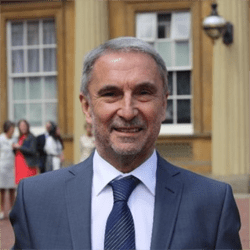
Using research to promote equity in education: challenges and possibilities
This keynote presentation will trace the development of an approach to research-practice partnerships that has been found to be helpful in promoting equity within education systems in various parts of the world. The approach involves teams of university researchers in supporting, recording and analysing collaborative action research as it occurs in schools. The presentation will explain how this can encourage knowledge-generation as researcher and practitioner expertise meet in particular sites aimed at producing new knowledge about ways in which broad values can be realised in practice. By looking at examples of the use of this approach, the presentation will go on to explain the sorts of challenges that have to be addressed for it to be implemented successfully. These are much about establishing a common understanding of the purposes of the approach and the development of professional relationships that make its use possible.
Mel Ainscow is Emeritus Professor of Education, University of Manchester, UK; Professor of Education, University of Glasgow, UK; and Adjunct Professor at Queensland University of Technology, Australia. A long-term consultant to UNESCO, he is internationally recognized as an authority on the promotion of inclusion and equity in education. Mel has led the development of a series of policy documents for UNESCO, including its ‘Guide for Ensuring Inclusion and Equity in Education’. Recently, he has completed collaborative research projects with networks of schools in Australia, Latin America and five European countries. Examples of his writing can be found in: ‘Struggles for equity in education: the selected works of Mel Ainscow’ (Routledge World Library of Educationalists series).
Mel Ainscow
Using research to promote equity in education: challenges and possibilities

When will we ever learn? Confronting the Déjà vu's of Multicultural Education/Intercultural Education from the Past into the Present
“When will they ever learn?” is the rhetorical question from the emblematic protest song “Where have all the Flowers Gone?” written by Pete Seeger in 1955. Urged is the need for listeners to ponder the consequences of wars and their aftermath and to consciously stop the cycle. That sense of protest is ever more relevant as we attempt to teach students about dialogue, co-existence, consensus building and peace-making while wars wage on, globalization and neoliberalism expand and social, cultural, and political agendas become fragmented and polarized. Changing the pronouns: “when will they learn to when will we learn” exemplifies the dilemma that despite many decades of multicultural and intercultural education teacher training, competence development, implementation of diversity policies and curriculum reform, we continue to witness epistemic violence, postcolonial approaches, non-transformative and non-critical pedagogies, linguistic insensitivities, gender inequalities, discriminatory practices, and racism in schools. In confronting this form of déjà vu, I draw upon my extensive multicultural training experiences and research in the Global South and North and address how we as educators can leverage the lessons of the past to:
- Re-shape our approaches in multicultural or intercultural education
- Question inequalities of class, race, gender, identity from their social institutional level to
instructional and individual levels - Acquire a critical postcolonial perspective which counteracts the reproduction of the same!
Explored will be selected multicultural and intercultural education approaches developed by educational anthropologists and educators which can help us situate our understanding of social justice, diversity, pertaining to equitable education. By raising critical questions about their limitations, we can reflect on the possibilities to enact processes of change, enabling schools and teachers to identify with students and parents of diverse backgrounds, cultures, languages, identities, orientations, and religions, while extending praxis to action and expanding what we learned in the past to enhance the present.
Martha Montero-Sieburth is a Lecturer in Ethnography at Amsterdam University College and between 2007 to 2016, was a Visiting Fellow at the Institute for Migration and Ethnic Studies in the Department of Sociology and Anthropology of the Social Science Faculty at the University of Amsterdam. She is Professor Emerita of the Leadership in Urban Schools Doctoral/Educational Administration Masters Programs at the University of Massachusetts in Boston and a former Associate Professor of the Teaching and Learning Program at the Harvard Graduate School of Education.
She is a multi-, cross-, and intercultural comparative educator with publications of American urban schooling, Latinos, and Mexicans in New England; bilingualism and curriculum development in Latin America; interculturalism in Spain; Latin Americans in Spain; Turkish Dutch youth in Dutch high schools and Moroccan Dutch youth in diverse organizations, and first- and second-generation Mexicans in the Netherlands. She has published extensively in English and Spanish, has several books, co-edited books, and articles. In 2021, she co-edited with Rosa Mas Giralt, Noemi Garcia Arjona and Joaquin Eguren, Family Practices in Migration: Everyday Lives and Relationships, published by Routledge Press. She is a keynote speaker for the Eighth International Conference on Teacher Education: Passion and Professionalism in Teacher Education of the Mofet Institute, in Tel Aviv, Israel in June 2023.
In fall 2023 and spring 2024, she will be preparing undergraduate students at AUC to refine their qualitative research skills by conducting community ethnography with diverse migrant groups in Amsterdam under the auspices of an Educational Development Initiative grant. Expected from this research is a book detailing the wealth of ethnographic community experiences.
Martha Montero-Sieburth
When will we ever learn? Confronting the Déjà vu's of Multicultural Education/Intercultural. Education from the Past into the Present

When will we ever learn? Confronting the Déjà vu's of Multicultural Education/Intercultural Education from the Past into the Present
At least in urban regions in Germany, school classes are usually multilingual. This poses challenges for all teaching, not only for language teaching. Empirical studies show that this challenge has not been met satisfactorily so far. In particular, learners with a migration background, for whom German is the language of schooling but not the only language of life, achieve lower competences than expected in natural sciences. In view of this, it is an open question whether teaching approaches that explicitly take the multilingualism of the classroom into account, are beneficial for science learning. This is the core question of the research project that I would like to present in the address. We are conducting an intervention study in the subject of physics at lower secondary school level in Hamburg, Germany. About 30 school classes were included. The presentation will focus on two questions: Does the intervention produce better results in learning physical concepts than lessons that do not explicitly take learners’ multilingualism into account? And: how do the learners perceive it when the physics lessons – in contrast to what they are used to – explicitly focus on the multilingualism that is present in the learning group?
Ingrid Gogolin is Senior Professor for International Comparative and Intercultural Education Research and director of the Research Center “Literacy in Diversity Settings LiDS” at Universität Hamburg in Germany. Her research is focused on migration and linguistic diversity in education. Research projects deal with topics as Linguistic diversity management in urban areas; Support of migrant children in schools; Multilingualism and Education; Language Education in an Immigration Society. Ingrid Gogolin was awarded honorary doctor degrees by the University of Dortmund/Germany in 2013 and the National Kapodistrian University of Athens/Greece in 2017.
Recent publications:
Gogolin, Ingrid; Hansen, Antje; McMonagle, Sarah; Rauch, Dominique (2020): Handbuch Mehrsprachigkeit und Bildung. Wiesbaden: Springer. ISBN: 978-3658202842. doi: 10.1007/ 978-3-658-20285-9
Gogolin, Ingrid; Schnoor, Birger; Usanova, Irina (2021): Crossing the bridge to literacy in foreign languages: C-test as a measure of language development. In: Multilingua – Journal of Cross-Cultural and Interlanguage Communication (ahead-of-print), S. 1-20 https://doi.org/10.1515/multi-2021-0018
Gogolin, Ingrid (2021): Multilingualism: A threat to public education or a resource in public education? – European histories and realities. The European Educational Research Journal (EERJ), Volume 20, No. 3. S. 297-310. doi: https://doi.org/10.1177/1474904120981507
Ingrid Gogolin
Teaching in the context of linguistic diversity. An empirical experiment
Scientific Committee
- Jun.-Prof. Dr. Barbara Gross – Chemnitz University of Technology, Germany
- Prof. Dr. Agostino Portera – University of Verona, Italy
- Drs. Barry Van Driel – President of the IAIE, The Netherlands
- Prof. Dr. Miri Shonfeld – Kibbutzim College of Education, Israel
- Dr. Leslie Bash – University College London, UK
- Prof. Dr. Birgit Glorius – Chemnitz University of Technology, Germany
- Jun.-Prof. Dr. Yolanda López García – Chemnitz University of Technology, Germany
- Prof. Dr. Martha Montero-Sieburth – Amsterdam University College, The Netherlands
- Dr. Mattia Baiutti – Fondazione Intercultura, Italy
- M.A. Marielena Groos – Chemnitz University of Technology, Germany
- M.A. Anja Bartl-Lassati – Chemnitz University of Technology, Germany
- Prof. Dr. Günter Daniel Rey – Chemnitz University of Technology, Germany
- Jun.-Prof. Dr. Jennifer Schluer – Chemnitz University of Technology, Germany
- Dr. Julio César Tovar Gálvez – Universidad a Distancia de Madrid, Spain
- Ass.-Prof. Dr. Marija Bartulović – University of Zagreb, Croatia
- Ass.-Prof. Dr. Barbara Kušević – University of Zagreb, Croatia
- Ass.-Prof. Dr. Ildikó Lázár – ELTE Eötvös Loránd University, Hungary
- Dr. Mungai Njoroge – Centre for Mathematics, Science and Technology Education in Africa, Kenya
- Ass.-Prof. Dr. Nektaria Palaiologou – Hellenic Open University, Greece
- M.Phil. Domiziana Turcatti – University of Oxford, UK
- Prof. Dr. Iris Nentwig-Gesemann – Free University of Bozen-Bolzano, Italy
- M.A. Hana Alhadi – Independent Researcher
- Prof. Dr. Gerwald Wallnöfer – Free University of Bozen-Bolzano, Italy
- Dr. Luisa Conti, University of Jena, Germany
- Prof. Dr. Sarah Désirée Lange , Chemnitz University of Technology, Germany
Local Organizing Committee
- Barbara Gross
- Marielena Groos
- Adam Markus
- Sophie Linßner
- Fabienne Dockendorf
- Ayse Turan
Important Links
Chemnitz University of Technology
Educational Science with a Focus on Intercultural Pedagogy
Tourism Chemnitz: https://www.chemnitz.travel/en/
https://visitsaxony.com/poi/chemnitz-tourist-information-chemnitz
If you have any questions, please email: iaie2024@tu-chemnitz.de